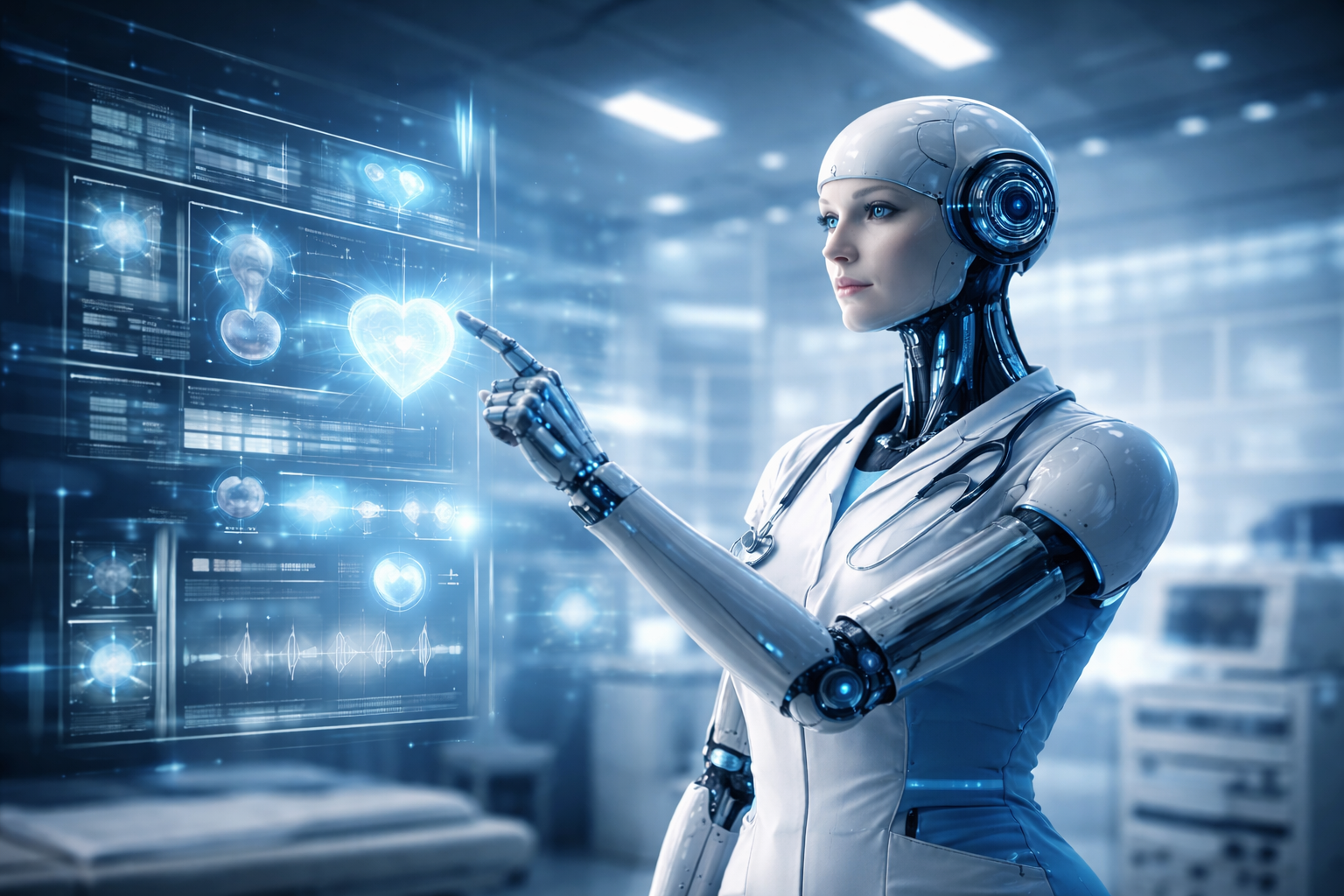
The problem: one-to-one bedside nursing isn’t scalable
In intensive care, some patients can’t safely be left alone—especially patients who are heavily sedated or in a coma. Michael gives a stark example: a sedated patient may still attempt to remove a respiratory tube, which can quickly become fatal. Historically, this risk is handled the brute-force way: a nurse physically stationed at the bedside.
But hospitals are changing. Michael explains that a Copenhagen university hospital moved from older multi-bed rooms to modern single-bed rooms, and that architectural upgrade created a staffing trap:
- In multi-bed rooms, 1–2 nurses could monitor ~4 patients.
- In single-bed rooms, monitoring often shifts toward 1 nurse per patient.
That’s not just expensive—it’s structurally hard in a world where nursing shortages are already real.
The product: MIGO as “artificial eyes”
MIGO uses live camera-based monitoring paired with AI that detects risk-relevant patient movements. The core idea is simple:
- The system watches continuously.
- The nurse gets notified only when something meaningful happens.
Crucially, Michael emphasizes that the system is not meant to replace nurses. It replaces the need for constant staring, not the need for clinical judgment, hands-on care, or human decision-making.
As Mia summarizes it in the interview: “So you are the artificial eyes of the nurse?”
Michael’s answer: Yes.
Avoiding alarm fatigue: training for “the signal, not the noise”
Mia raises a smart concern: hospitals already suffer from alarm fatigue—too many alerts, too many false positives, too much noise. A motion sensor that panics at everything (like pets triggering outdoor lights) would make nurses’ lives worse, not better.
Michael’s response is that MIGO is trained to be selective. The system has been trained on:
- ~54,000 patient movements
- 100+ million images
Instead of alerting on generic motion, it detects specific risky behaviors the nurse chooses to be notified about, such as:
- A hand/arm moving toward the face (relevant for tubes/lines)
- Attempts to remove medical equipment
- A patient beginning to roll or move out of bed
So the human defines what matters; the AI watches for those patterns.
Beyond real-time alerts: better reporting, better decisions
One of the more “quietly powerful” parts of the product is that it doesn’t just notify—it also logs events so staff can review patient activity patterns.
Michael describes how this supports morning clinical conferences: the care team can review the past 24 hours (especially the night) and decide:
- Was the night calm or restless?
- Do we adjust medication?
- Do we need closer observation today?
- Is recovery progressing in a way that supports earlier discharge?
In other words, MIGO helps shift care from guessing based on scattered impressions to decisions supported by documented patterns.
Privacy and security: designed to reduce misuse
Because this is live video monitoring in healthcare, Mia pushes hard on the obvious question: can this be abused?
Michael describes several guardrails:
- No cloud storage: the system runs inside the hospital environment.
- Live feed only: they do not keep a video recording that staff can rewind like CCTV.
- Role/ward-based access control (“tenants” in IT terms): staff can only access patients on their own ward, because they’re the ones who can actually act.
This is paired with the reality that healthcare already operates under strict ethical duties (Michael references professional ethics alongside GDPR realities): misuse is illegal and professionally sanctionable—but the system is also designed to minimize temptation and opportunity.
Building it: co-creation with nurses, not “AI in a vacuum”
A theme Mia returns to repeatedly is: how do you build AI for a regulated, high-stakes environment without fooling yourself?
Michael’s answer is very Scandinavian in spirit: co-create with the people doing the work.
- They worked with ~65 nurses
- Across 10 workshops
- Iterating each time: build → show → get feedback → improve
Then the hospital tested the system for a full year, which mattered because clinical reality is messy:
- light changes (doors opening/closing)
- daylight differences across seasons (Denmark winter vs summer is not subtle)
- night conditions
- ward variation
The outcome goal wasn’t “cool AI”—it was reliable patient safety across all conditions.
Regulation: necessary, but slow and expensive
Michael is blunt: European healthcare regulation is heavy, and it slowed them down and increased costs—especially as rules changed during development. He describes moving from one regulatory framework to a much larger one, which forced more documentation work and additional external consulting.
At the same time, he acknowledges why it exists: in health tech, you need the technical file and clinical file (including the data behind the model) to demonstrate safety and compliance.
The future: from hospital rooms to patients’ homes
The most forward-looking part of the conversation is where the “artificial nurse” stops being an ICU-only tool and becomes a broader care model.
Michael predicts that within the next few years, the same monitoring logic will expand into the home, as healthcare systems push for earlier discharge and more outpatient home recovery. The challenge is that at home, patients may not behave as they should (medication adherence, risky movement, complications). Monitoring could help hospitals maintain oversight remotely.
Mia sketches a future where:
- patients are home with equipment and reminders,
- vitals and key signals are tracked,
- data flows back to hospital teams,
- and decisions can be made with near real-time context.
Michael adds another social layer: families often ask if they can have similar monitoring at home—especially for relatives living alone. In that setting, the “artificial nurse” becomes not only clinical support, but a safety net for independence.
Will nurses be replaced?
Michael’s stance is consistent: no—not if we’re talking about the role of a nurse.
His reasoning:
- AI may outperform humans on certain diagnostic tasks, but healthcare still needs human decision-making and human interaction.
- Empathy, conversation, reassurance, and hands-on help (turning a patient, assisting movement, reading the room) remain deeply human jobs.
- The point is not to reduce nursing headcount, but to make scarce nursing time land where it matters.
He frames AI as the next step after tools like pen-and-paper, typewriters, PCs, Word/Excel: a faster way to compile information and offer guidance—while humans still decide and act.
So what is the Artificial Nurse, really?
Based on this interview, the “Artificial Nurse” is best understood as a capability, not a character:
- Always-on observation without exhaustion
- Pattern recognition trained on real clinical movements
- Selective alerting to reduce noise
- Documentation that improves team decision-making
- Security and access controls suited for healthcare reality
- A bridge toward hospital-grade monitoring at home
It’s not a robot replacing nurses.
It’s a system that gives nurses back their attention—and gives patients a better chance of being safe when no human can afford to stare at them every second.

.jpeg.jpg)